Learn

Generative engine optimization is the work of being quotable.

An AI answer is assembled out of sources, so being one of those sources is the only durable position inside it. That is the whole idea, stripped of jargon. The engine is not judging anyone. It reads, and then it quotes what it read. GEO is making sure that when it reads about your category in your town, your pages are the ones worth quoting.

Last reviewed 2026-07-28
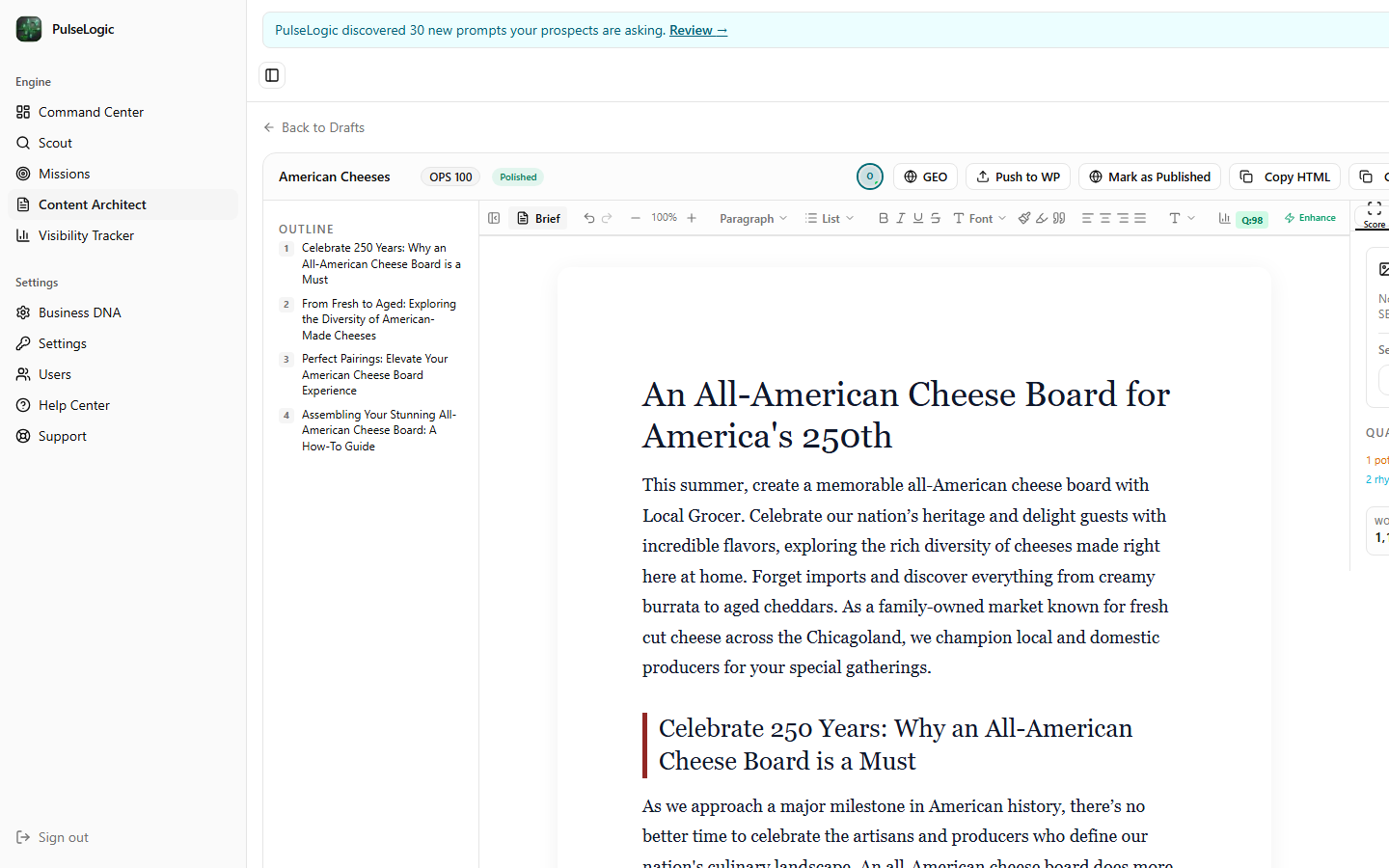
A drafting editor showing a numbered outline column, the article on the canvas, a quality score, and publish controls.
The editor with the outline and quality checks in one frame. Product screenshot from a pilot account, anonymized.

The right to be quoted

Sources win. Opinions about sources do not. A page that states plainly what you do, where you do it, and under what conditions will be lifted into an answer more often than a cleverer page that never quite commits to anything. This is why the useful version of the work is unglamorous: write the fact down, in a sentence a machine can extract without interpretation, on a page about that one thing.

What Google actually punishes

The fear that stops most owners is whether publishing AI-assisted pages gets them penalized. Google's own spam policy documentation does not say that. It defines scaled content abuse as when many pages are generated for the primary purpose of manipulating search rankings and not helping users, and the AI-specific line it draws is using generative tools to generate many pages without adding value for users. The trigger is scale without value, not the involvement of software. One specific page, answering one real buyer question, reviewed by somebody who knows the business, does not resemble that pattern in any respect. Source: Google Search Central, Spam policies for Google web search, checked 2026-07-28.

Volume without judgment

The thing Google punishes and the thing readers punish are the same thing, and it is volume without judgment. That is a rare alignment. Usually the incentive to publish more fights the incentive to publish well, and somebody has to lose. Here the owner, the reader, and the engine all want the same artifact: fewer pages, each one about something real, each one with a person's judgment visibly in it.

Rehearse the quote before you publish

There is a practical way to apply all of this before a page goes live. Read your opening paragraph and ask what an answer engine could actually lift from it. A vague lead gives it nothing. A lead that answers the question in its first two sentences hands it the excerpt. PulseLogic does this as a step in the editor: it reads your draft the way an answer engine would and shows the snippet it would quote you with. Rewrite the lead, run it again, watch the quote improve. It is a rehearsal, not a prediction, and it does not gate anything. No tool can promise an engine will pick you. What a rehearsal does is make sure that if the engine looks your way, what it finds is liftable.

What this page did not cover

Naming the edges is part of the answer. Anything below is a different question with a different page.

  • Traditional SEO. Titles, internal links, and site speed still matter and are not what this page is about.
  • The measurement half. Which questions you are losing, and on which engines, is the other door.
  • Schema and structured data in depth. They belong to the publishing step, not to the writing idea.

The measuring half tells you what to write. The writing half is where this becomes pages, one at a time, with your judgment in each one.

See how the writing half works

Questions

What buyers ask before they start

Is GEO different from SEO?

Different surface, same honesty. The techniques overlap more than the naming war suggests: write the thing down clearly, on a page about that thing, and make it easy to verify. What changed is where the answer gets assembled and how few names it holds.

Will publishing AI-assisted content hurt my rankings?

Not for being AI-assisted. Google's spam policy targets many pages generated to manipulate rankings without adding value for users. The variable is scale without judgment, which is why one reviewed page answering one real question is a different act from a hundred published in a weekend.

Where do I start?

One page, answering one question you can prove buyers are asking. Not a content calendar and not a category strategy. Find the question first, because writing the wrong page well is the most common way this fails.