AI visibility for personal injury firms
The first question is never who should represent me.
It is whether to see a doctor, whether to talk to the other insurer, how long they have to decide, whether they even have a case. People ask an assistant those questions in the days before they call anyone, and the answers come from whatever has been written. Being the firm whose material is behind those answers is a different position from being an ad that appears once they start looking.
Buyer asks
Answer names
The AI engine compares local options, checks the evidence it can cite, and names your business when your content gives it the clearest answer.
Why this market needs answer visibility
The research window opens immediately after the incident and closes when a firm is chosen. Almost none of it involves the word lawyer.
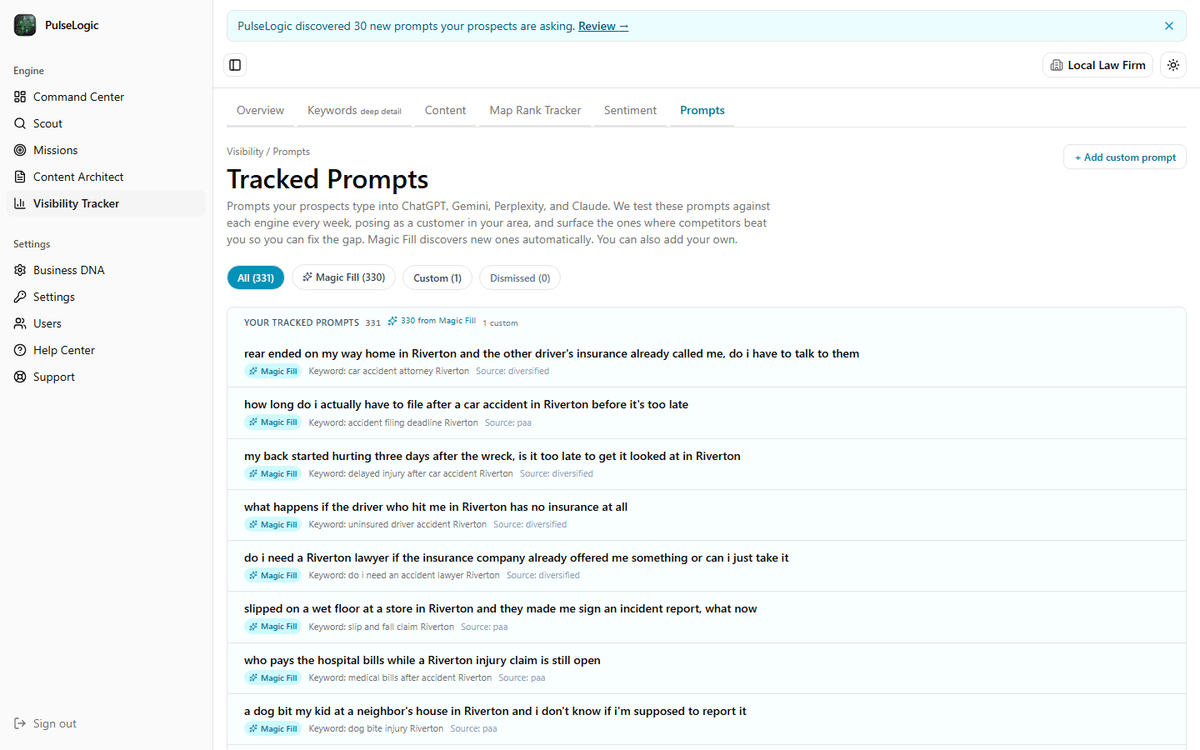
The questions that come first
What to do at the scene. Whether to give a statement. How medical bills get paid in the meantime. What a deadline means. These are the questions being asked, and they are asked before anybody has decided to hire anyone. A firm that has answered them plainly is present during the only part of the process where the decision is actually being formed.
This is the most competitive advertising market there is, and this channel is not that
You already know what a click costs in this category. The AI answer is a different surface with different economics, and at the moment it is being assembled largely from directories and content mills rather than from firms. That will not stay true, and the firms whose material is behind those answers in two years are writing it now.
Written by lawyers, gated before it publishes
Nothing about this replaces professional judgment, and in your category that matters more than most. The draft arrives grounded in your firm's own material, an attorney edits the outline before anything is written, and nothing publishes without approval. Advertising rules, disclaimers, and what may and may not be claimed remain your call and your bar's.
What you open to
The morning after you turn it on.
What it does not do
Worth knowing before you buy, not after.
- It does not provide legal advice, and nothing it drafts should be published without an attorney reviewing it.
- It does not know your jurisdiction's advertising rules. Compliance is yours.
- It does not generate case leads or intake, and it does not guarantee an AI engine will name your firm.
Ask an assistant what someone should do in the week after a car accident in your state, and see whose material the answer is built on. The free AI Mirror Test runs those questions across all nine surfaces we track today and prints every one it asked.
Run the free AI Mirror TestQuestions
What buyers ask before they start
Can it write legal content safely?
It can draft the informational questions people ask before they hire anyone, grounded in your firm's own material. Everything it produces needs an attorney to review it before publishing, and your advertising rules are yours to apply. Treat it as a drafting tool with a gate, not as a compliance system.
We spend heavily on paid search already. Why add this?
Because a paid click starts when someone is already looking for a lawyer. This is the window before that, when they are asking what to do, and it is currently being answered by material nobody at a firm wrote.
How many pages does this realistically mean?
Fewer than you would expect. The questions that matter in one state are a short and finite list, and most firms have answered none of them in a way a machine can read.