Feature
AI Visibility Tracker
The AI Visibility Tracker measures whether your business is named, mentioned, or absent across the AI search surfaces buyers use. The goal is not another dashboard. The goal is to turn each missing answer into a ranked mission your team can publish and measure again.
Nine AI search surfaces, each one named
Named, mentioned, and absent states per surface
Per-location scoring, so one weak market cannot hide in an average
Every gap becomes a mission you can publish
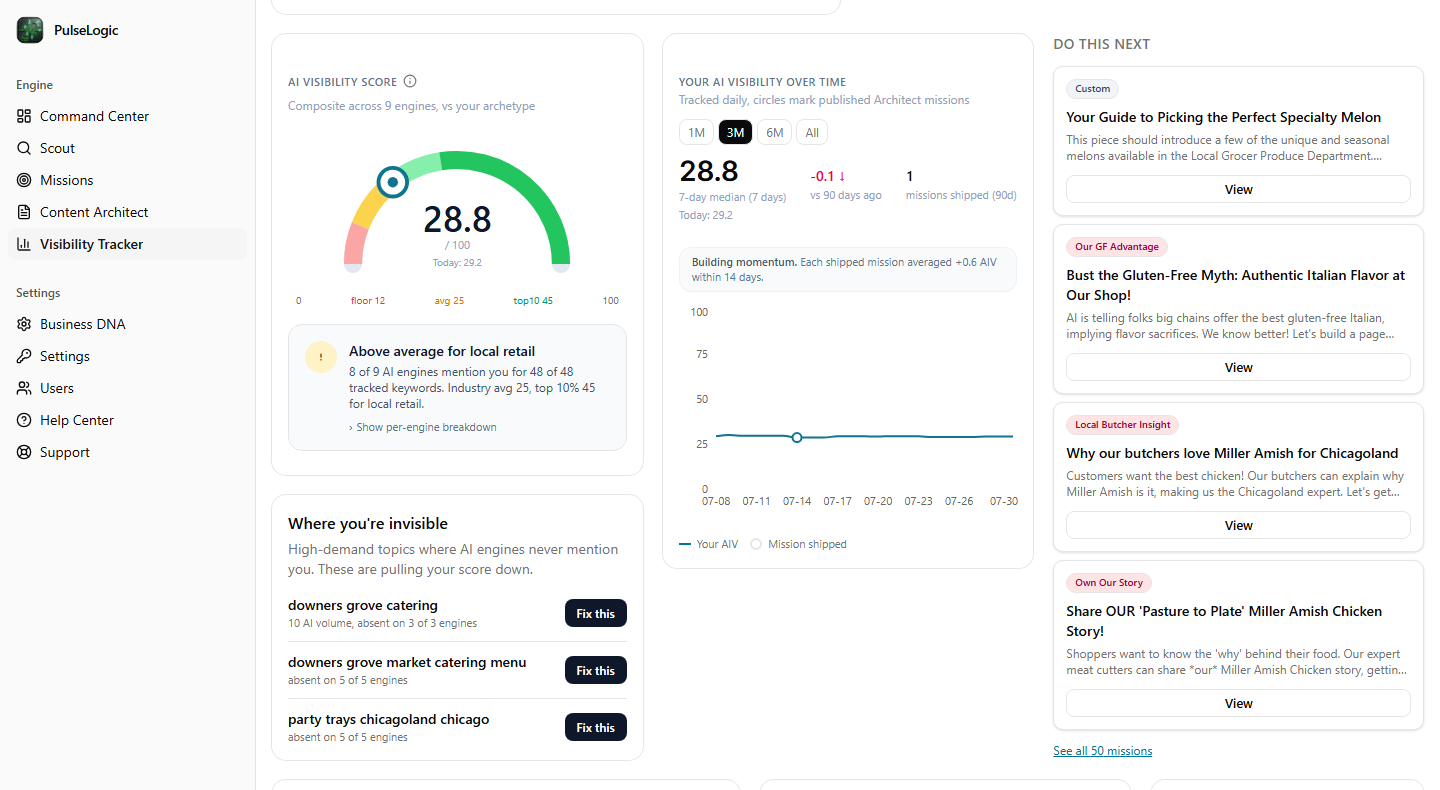
Two scores, and they are not the same thing
AI Search Visibility measures presence: does the answer name you. The AI Authority Score is a separate blend that weighs visibility alongside citation activity and the work you have shipped. They move independently, and conflating them is the fastest way to misread your own data. A business can be widely mentioned and still hold weak authority, which is a different problem with a different fix.
Scored the way your category is actually judged
A grocer and a law firm are not judged on the same surfaces, so they are not scored on the same mix. The Local Pack decides a great deal for one and almost nothing for the other. Your score is weighted for the kind of business you are, which is why it is comparable over time for you rather than being an average of everybody.
Per location, not per domain
Most AI visibility checkers score a domain. This scores each market separately, so a chain can see which town is winning and which is not. That distinction is the entire reason a multi-location business needs a different view from a single-address one, and it is why an average across markets tends to hide the market that needs the work.
The measurement cadence
Measurement runs twice a week, asking as a customer in your area rather than as your business. That matters more than it sounds: an engine answers a local question differently depending on where it thinks you are. Trend views carry real history, so a change you shipped in March is still visible in September.
What it does not do
Worth knowing before you buy, not after.
- It does not guarantee rankings, citations, or revenue. It measures, prioritizes, drafts, and measures again.
- It does not invent a surface count. Nine surfaces feed the score today, we name all nine, and the roster grows as buyers adopt new engines.
- Traffic and engagement figures need Google Analytics connected. Impressions and average position need Search Console. Included is not the same as populated on day one.
Questions
What buyers ask before they start
Which AI search surfaces does PulseLogic track?
Google AI Overview, Google AI Mode, Google Local Pack, Google Featured Snippet, Google People Also Ask, ChatGPT, Gemini, Claude, and Perplexity. We name every surface we track and never inflate the count.
How often is visibility measured?
Twice a week. The check is run the way a customer would run it, from where your customers are, because an engine answers a local question differently depending on where it thinks the person asking is standing.
What is the difference between AI Visibility and the AI Authority Score?
AI Search Visibility measures presence, meaning whether the answer names you. The AI Authority Score is a separate blend that weighs visibility alongside citation activity and shipped work. They are reported separately and should never be quoted as one number.